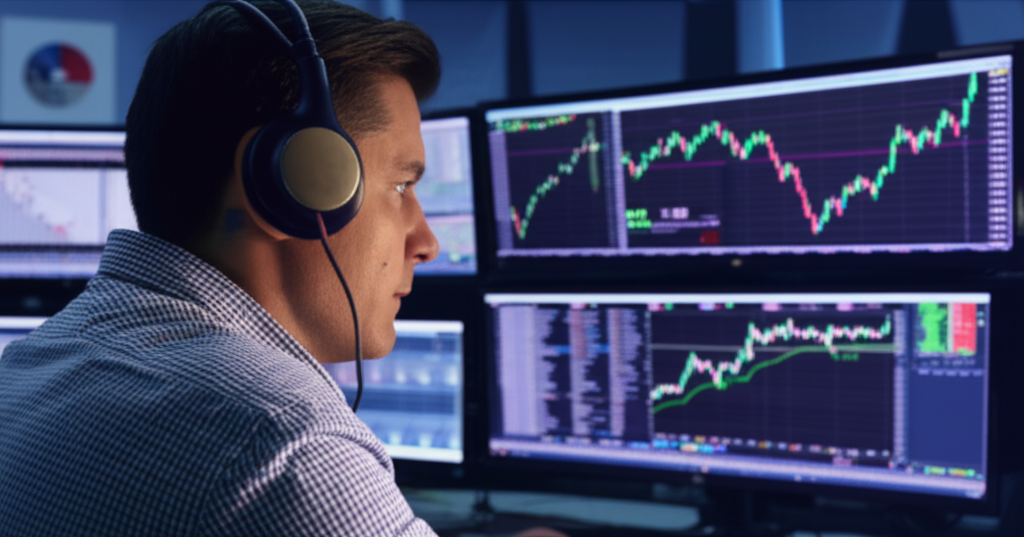
What is Speculative Trading in Commodities?
Speculative trading in commodities involves purchasing or selling financial products tied to raw materials, aiming mainly to profit from expected shifts in prices down the road. This differs from hedging, which producers or buyers use to shield against price swings-for instance, a farmer might sell futures contracts to secure a fixed price for their harvest. Speculators, on the other hand, jump in purely to benefit from their outlook on rising or falling prices. They might buy low and sell high, or short-sell high and buy back low, across assets like crude oil, natural gas, crops such as corn and soybeans, and metals including gold and silver. This kind of trading forms a key part of today’s financial systems, delivering benefits that many everyday investors overlook.
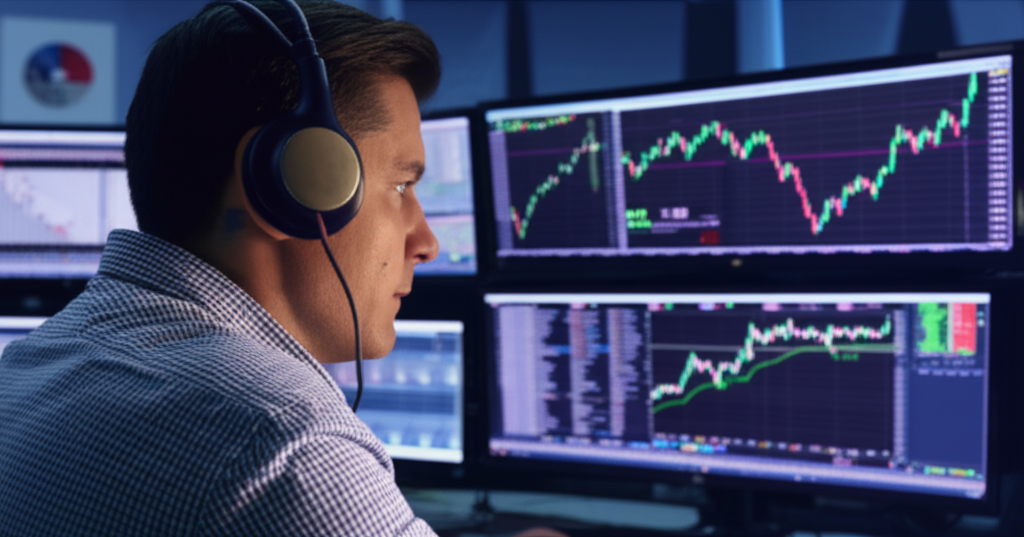
The Role of Speculators in US Commodity Markets
Though speculators sometimes face criticism, they contribute essential elements to how US commodity markets operate smoothly and effectively.

Providing Liquidity
Speculators help keep commodity markets fluid by always ready to trade, allowing hedgers and others to buy or sell positions swiftly without causing major price disruptions. The resulting high volume of trades narrows the gap between buy and sell prices, which lowers costs and streamlines how companies handle their exposure to commodity fluctuations. In their absence, these markets could become stagnant and hard to use.
Facilitating Price Discovery
At the heart of setting fair prices, speculators dig into data like supply-demand projections, international tensions, weather forecasts, and economic indicators. Their trades weave fresh insights into current prices rapidly, helping ensure that values truly mirror all known factors. This leads to a more reliable and equitable way for prices to form across the board.
Assuming Risk from Hedgers
One core function speculators serve is taking on the price uncertainty that hedgers prefer to avoid. For example, oil producers or airlines want steady costs amid wild swings, so speculators step in to shoulder that volatility for a shot at gains based on their predictions. This setup lets companies concentrate on their main business while gaining predictability in commodity-related finances.
The Instruments of Commodity Speculation in the United States
American investors interested in speculating on commodities have access to various tools, each bringing unique features and levels of risk.
Futures Contracts
These are binding deals to exchange a set amount of a commodity at an agreed price on a set future date, standardized for consistency. They’re the go-to for straight-up commodity bets in the US, traded on platforms like the CME Group and Intercontinental Exchange (ICE). To start or hold a position, traders post margin-a fraction of the full contract value-which provides leverage but can magnify losses just as much as gains.
Options on Futures
These contracts let holders choose to buy a futures contract (via a call) or sell one (via a put) at a fixed strike price by a deadline, without any requirement to follow through. The risk caps at the upfront premium, yet they still allow for leveraged plays. Traders favor them for sophisticated approaches or to cap losses more tightly than plain futures.
Exchange-Traded Funds (ETFs) and Exchange-Traded Notes (ETNs)
Everyday investors can gain commodity exposure indirectly through ETFs and ETNs, which trade on stock exchanges much like shares and often follow price indexes or bundle futures. They bring ease and spread-out holdings, lowering the entry barrier for speculation. That said, fees for management apply, and tracking errors can arise from market conditions like contango-when future prices exceed spot prices-or backwardation, the reverse scenario.
Contracts for Difference (CFDs) – A Note for US Traders
Overseas, CFDs let traders wager on price changes without owning the asset itself, but US rules ban them for retail participants. Enforced by regulators such as the CFTC, this restriction means American residents can’t use CFTC-registered brokers for CFDs. Platforms extending CFDs to US retail users typically fall outside legal bounds here.
The Impact of Speculative Trading on Commodity Prices in the US Market
Debates persist over how speculation affects commodity prices, especially for everyday essentials in the American economy.
Arguments for Positive Impact
Supporters highlight how speculation boosts overall market performance and steadiness. The added liquidity curbs sudden jolts that illiquid settings might suffer, while quick info integration makes prices better align with real supply and demand. In turn, this sharpens decisions on resources and investments for industries nationwide.
Arguments for Negative Impact & Price Volatility
On the flip side, opponents warn that too much speculation can inflate bubbles, heighten swings, and skew prices away from basics, particularly in food and fuel. Past episodes of soaring grocery or gas costs have sparked questions about whether traders worsen these beyond supply issues alone. Though proof varies, watchdogs keep a close eye to curb abuses and maintain trust.
Regulatory Landscape for Commodity Speculation in the United States (2025 Outlook)
US commodity trading stands out for its strict oversight, promoting fairness and resilience in a global context.
The Role of the CFTC (Commodity Futures Trading Commission)
The Commodity Futures Trading Commission (CFTC) leads federal supervision of derivatives, covering commodity futures and options. It works to build open, clear, competitive markets free from systemic threats, while safeguarding users from deceit, tampering, and misconduct. Heading into 2025, the agency is gearing up for tech shifts and new setups to keep its watch effective.
Speculative Position Limits
Aimed at blocking overreach that might warp prices or enable manipulation, the CFTC sets caps on how many futures or options contracts one party can control in select commodities. These rules foster level playing fields and stop dominant players from swaying the market unfairly.
The Commodity Exchange Act
Enacted in 1936 and updated repeatedly, the Commodity Exchange Act (CEA) underpins rules for US futures and options in commodities. It empowers the CFTC to oversee traders, venues, and deals broadly. As 2025 approaches, the CEA holds firm as the core framework, with talks on crypto ties and fresh platforms possibly prompting tweaks.
How to Engage in Speculative Commodity Trading in the United States in 2025
Americans eyeing commodity speculation should follow a careful path to get started right.
Key Considerations for US Traders
Risks loom large, so only commit funds you can lose in these unpredictable arenas. Build deep insight into commodity basics, track global events, and master tax rules plus legal tools. For added context, remember that events like supply disruptions from weather can swing prices fast, underscoring the need for ongoing vigilance.
Choosing a Platform for Commodity Speculation
Picking the best venue matters a lot-look at its US regulatory nod (CFTC for futures and options), range of products, costs like commissions and margins, tools for analysis and orders, plus support quality.
| Broker | Key Advantages for US Speculators | Available Instruments for US Traders | Regulatory Compliance (US) |
|---|---|---|---|
| Moneta Markets | Globally recognized for competitive spreads across a wide range of instruments, offering advanced, user-friendly trading platforms and robust customer support suitable for active speculative traders seeking diverse global market access. While primarily known for CFD/Forex globally, they offer competitive futures and options access where permitted for US clients via specialized accounts or partnerships. | Futures, Options (on Futures), Commodity ETFs (via partners/specific accounts) | Regulated in multiple jurisdictions (e.g., FCA), offering services to US clients via specific compliant channels or products. |
| OANDA (US) | A strong choice for US-based traders, offering competitive pricing and a highly regarded platform for futures trading in various commodities, backed by robust regulatory compliance. Known for transparent pricing. | Futures (various commodities), Options (on Futures) | CFTC, NFA regulated for US operations. |
| IG (US) | A well-established broker with a significant presence in the US, providing comprehensive access to futures and options markets for commodities, complemented by extensive research and educational tools. Good for active traders. | Futures (various commodities), Options (on Futures) | CFTC, NFA regulated for US operations. |
Image: A screenshot comparing the user interfaces of Moneta Markets, OANDA, and IG trading platforms, highlighting key features relevant to commodity futures and options.
Strategies and Risk Management for Speculative Commodity Trading in 2025
To thrive in commodity speculation, blend proven tactics with tight controls on exposure.
Common Speculative Strategies
- Trend Following: Spotting ongoing price directions and joining them, going long in rises or short in drops.
- Mean Reversion: Wagering that extreme price drifts will snap back to norms.
- Fundamental Analysis: Weighing elements like supply chains, reports, and world affairs to predict shifts-for example, a drought’s effect on wheat yields.
- Technical Analysis: Relying on graphs, signals, and past patterns to gauge coming moves.
Essential Risk Management Techniques
- Position Sizing: Figuring out trade sizes to keep losses under a set share of your funds.
- Stop-Loss Orders: Setting automatic sells if prices hit a bad threshold, curbing further damage.
- Diversification: Even in focused plays, branch into varied commodities or areas to dilute threats.
- Capital Preservation: Put safety first over chasing big wins.
- Avoid Over-Leveraging: Leverage boosts upside but can wipe out accounts quickly if misused.
| Technique | Description | Benefit |
|---|---|---|
| Position Sizing | Calculating the optimal number of contracts based on risk tolerance. | Prevents single trades from decimating capital. |
| Stop-Loss Orders | Automated exit points to limit losses. | Protects capital from adverse price movements. |
| Diversification | Spreading investments across different commodities or strategies. | Reduces overall portfolio risk. |
Image: An infographic illustrating the concept of a stop-loss order on a futures chart.
The Future of Commodity Speculation in 2025 and Beyond
Commodity speculation keeps changing with broader forces. By 2025, expect these drivers:
- Technology: AI, machine learning, and automated systems will refine efficiency and approaches, perhaps enabling faster reactions to news.
- Geopolitical Factors: Conflicts, tariffs, and alliances could disrupt flows, spiking prices in oil or metals.
- Climate Change: Storms, shifting crops, and green energy pushes will hit energy and farm sectors hard, creating new speculative angles.
- Evolving Regulatory Landscape: The CFTC and peers will tackle innovations like digital trading, possibly adding safeguards for speed trading.
- Increased Retail Participation: User-friendly apps and learning tools could draw more everyday Americans into the fray.
Image: A conceptual graph showing projected growth in retail commodity trading participation by 2025, juxtaposed with technological advancements.
Conclusion: Navigating Speculative Commodity Trading in the US Market
While commodity speculation holds promise for strong returns, the downsides demand respect. US participants must grasp speculators’ place, available options, price effects, and CFTC-guided rules. Pairing smart plans with risk checks, plus trusted outlets like Moneta Markets, OANDA (US), or IG (US), positions traders to handle these lively markets wisely through 2025 and later.
| Benefits | Risks |
|---|---|
| High profit potential from price movements. | High risk of capital loss due to volatility. |
| Diversification from traditional assets (stocks/bonds). | High leverage can amplify both gains and losses. |
| Liquidity and efficient price discovery. | Exposure to geopolitical and environmental shocks. |
| Access to global economic trends. | Complex instruments requiring significant market knowledge. |
Image: A visual summary infographic of the pros and cons of commodity speculation.
What is speculation in the commodity market in the United States?
In the United States, speculation in the commodity market refers to the act of buying or selling commodity-linked financial instruments (like futures, options, or ETFs) with the primary goal of profiting from future price movements, rather than for hedging purposes (i.e., to mitigate risk related to production or consumption of the physical commodity).
Is trading in the commodity market considered speculative or not for US investors?
For most retail investors and individuals entering the market primarily to profit from price fluctuations, trading in the commodity market is indeed considered speculative. While some large corporations use commodity markets for hedging, the participation of individual traders is overwhelmingly speculative.
What is an example of speculative trading in commodities for a US citizen?
A US citizen engages in speculative trading if they believe crude oil prices will rise due to geopolitical tensions and decide to buy crude oil futures contracts. Their goal isn’t to take delivery of oil, but to sell the contracts later at a higher price for a profit. Similarly, if they expect gold prices to fall, they might sell gold futures, hoping to buy them back cheaper.
Who are the major commodity traders globally and how do they impact the US market?
Major global commodity traders include large multinational corporations such as Glencore, Cargill, Vitol, Trafigura, and Archer Daniels Midland (ADM). These firms engage in both physical trading and financial derivatives. They impact the US market by influencing global supply and demand dynamics, setting benchmarks, and participating heavily in US-based commodity exchanges like the CME Group, thereby contributing to liquidity and price discovery.
What are the key strategies for speculative trading in commodities in 2025?
Key strategies for speculative trading in commodities in 2025 will continue to include trend following, mean reversion, and analysis based on both fundamentals (supply/demand, geopolitics, climate) and technical indicators (chart patterns, moving averages). The increasing role of algorithmic trading and AI will also influence strategy development.
How does arbitrage work in the commodity market?
Arbitrage in the commodity market involves simultaneously buying and selling an asset (or related assets) in different markets to profit from a price discrepancy. For example, a trader might buy a commodity futures contract on one exchange and simultaneously sell an identical contract on another exchange if there’s a slight price difference, locking in a risk-free profit. This activity helps to ensure price efficiency across markets.
What constitutes excessive speculation in the stock market compared to commodities?
Excessive speculation in both markets generally refers to trading activity that is perceived to distort prices beyond fundamental values, often leading to bubbles or crashes. In commodities, this often evokes concerns about essential goods (food, energy). In the stock market, it might refer to widespread irrational exuberance or panic leading to sharp, unsustainable price movements in individual stocks or the broader market. Regulators like the CFTC implement position limits in commodities to prevent such issues, while stock market oversight bodies like the SEC focus on market manipulation and insider trading.
What is the Commodity Exchange Act and how does it regulate US speculation?
The Commodity Exchange Act (CEA) is the foundational federal law governing commodity futures and options trading in the US. It grants the Commodity Futures Trading Commission (CFTC) the authority to regulate these markets. For speculative trading, the CEA helps by:
- Establishing clear rules for market conduct.
- Prohibiting fraud and market manipulation.
- Authorizing the CFTC to set speculative position limits to prevent undue influence by large traders.
- Ensuring transparency and financial integrity of exchanges.
Platforms like Moneta Markets, when providing access to US-regulated commodity derivatives, operate within the framework established by the CEA, ensuring a regulated environment for US speculators.
 English
Be First to Comment