
The metaverse has evolved from a futuristic idea in science fiction novels to a real-world digital realm that’s changing the way people connect, collaborate, and entertain themselves. American investors eager to tap into this major transformation can find a smart starting point through Metaverse Exchange Traded Funds, or ETFs. Heading into 2025, the scene for virtual environments is gaining maturity, bringing exciting possibilities alongside some distinct hurdles. This in-depth overview equips U.S. investors with insights into metaverse ETFs, exploring what drives them, leading options, smart approaches to investing, and essential factors to weigh as this field continues to develop.

These funds stand out because they bundle together various assets tied to the metaverse, allowing everyday investors to gain a foothold without betting everything on one company. With advancements in hardware and software accelerating, the potential for widespread use-from virtual meetings in corporate settings to immersive shopping experiences-makes this an area worth watching closely.
What Are Metaverse ETFs and Why Invest in Them in the United States?
Metaverse ETFs deliver a spread-out stake in the businesses shaping, running, and profiting from the metaverse landscape. For investors in the U.S., these vehicles present a straightforward and typically steadier route into a fast-expanding yet intricate tech arena.
Defining the Metaverse and Its Core Components
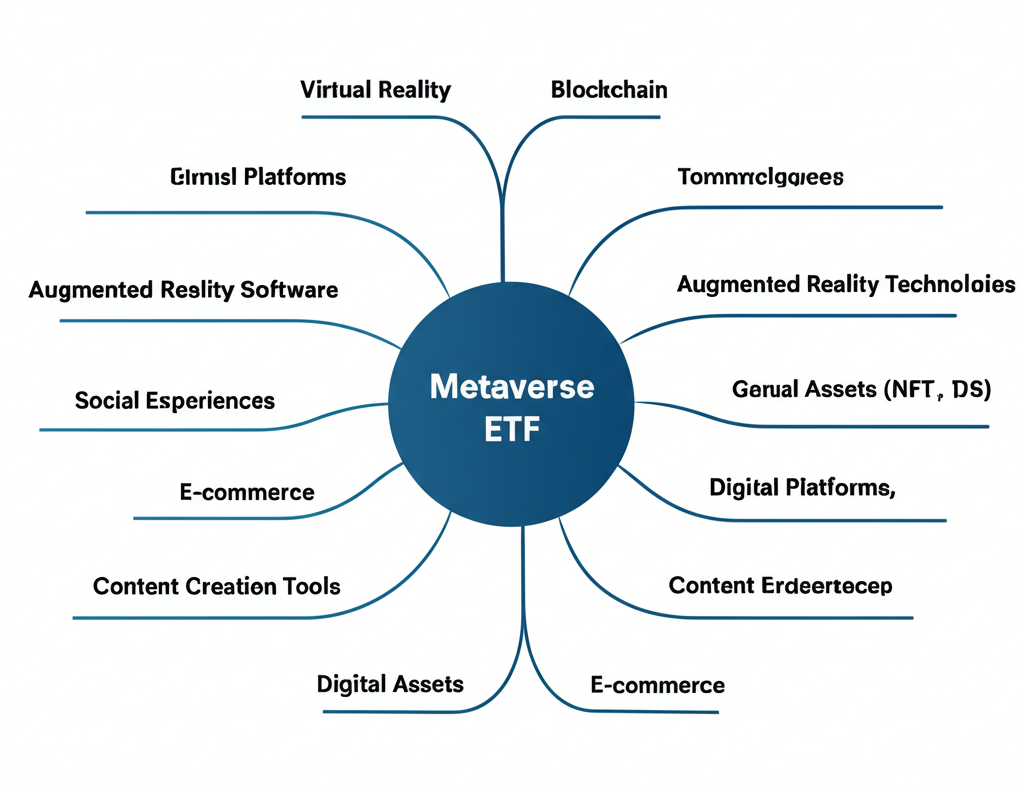
Fundamentally, the metaverse amounts to an ongoing, linked collection of three-dimensional virtual spaces that people access through all sorts of gadgets, enabling interactions with fellow users, virtual items, and AI-powered elements. Rather than one isolated offering, it forms an interconnected system relying on key building blocks:
- Virtual Reality (VR): Hardware like headsets combined with software that pulls users fully into simulated settings.
- Augmented Reality (AR): Tools that layer digital elements over physical reality, commonly through mobile phones or dedicated eyewear.
- Blockchain and NFTs: Secure, shared databases that support true ownership of digital items, ensure limited supply, and handle trustworthy exchanges of non-fungible tokens (NFTs) for things such as virtual artwork, property, or memorabilia.
- Web3: A user-centric version of the web that prioritizes personal control over information, frequently driven by blockchain foundations.
- Companies Building Them: An array of players-from device makers and app creators to game developers, transaction handlers, and cloud service providers-are all pitching in to assemble this expansive digital space.
How Metaverse ETFs Work for US Investors
These ETFs function as exchange-listed funds that pool together a selection of metaverse-related stocks and securities. U.S. investors benefit in multiple ways:
- Diversification: Rather than zeroing in on one metaverse stock, these funds spread investments across numerous firms in varied parts of the ecosystem, dialing down the danger of any single pick underperforming.
- Accessibility: Traded just like regular stocks, they’re simple to acquire or offload via everyday U.S. brokerage platforms, opening doors for investors at all levels.
- Professional Management: Most follow a passive strategy by mirroring an index, but others involve hands-on oversight from experts who tweak selections in response to shifting market conditions.
- Thematic Focus: They let you zero in on this particular high-potential area without needing to dive deep into every company’s details.
The Investment Thesis: Growth Drivers for 2025 and Beyond
The case for putting money into metaverse ETFs as 2025 nears looks solid, fueled by several powerful trends:
- Market Projections: Experts anticipate explosive expansion in the metaverse economy, with projections pointing to multi-trillion-dollar valuations over the next ten years. For example, Grand View Research predicts substantial scaling in the sector.
- Technological Advancements: Ongoing refinements in VR and AR devices, faster 5G networks, smarter AI systems, and more robust blockchain setups are creating smoother, more captivating virtual interactions.
- Increasing Adoption: The metaverse’s reach extends far past video games into fields like online learning, business teamwork, e-commerce, and media, drawing in a wider crowd of participants.
- US Corporate Involvement: Powerhouses such as Meta Platforms, Microsoft, Apple, and Nvidia are pouring resources into metaverse tools, which reflects deep confidence from big U.S. institutions in its long-term viability.
Top Metaverse ETFs Available for United States Investors in 2025
U.S. investors have access to a handful of ETFs that zero in on the metaverse. Grasping each one’s approach helps in picking the right fit.
| ETF Ticker | Name | Expense Ratio | Primary Focus | Key Holdings (Examples) |
|---|---|---|---|---|
| METV | Roundhill Ball Metaverse ETF | 0.59% | Broad Metaverse Ecosystem | Nvidia, Roblox, Meta Platforms, Unity |
| VERS | ProShares Metaverse ETF | 0.58% | Hardware, Software, Services | Meta Platforms, Apple, Microsoft, Amazon |
| META | iShares Future Metaverse Tech and Comm. ETF | 0.47% | Tech & Communications Sector | Meta Platforms, Roblox, Tencent, Apple |
| FMET | Fidelity Metaverse ETF | 0.39% | Tech, Hardware, Software, Services | Meta Platforms, Apple, Nvidia, Sony |
| METV | Global X Metaverse ETF | 0.50% | Digital Infrastructure, Content | Meta Platforms, Microsoft, Apple, Autodesk |
Note: Expense ratios and holdings are subject to change and should be verified with the latest fund documents.
Roundhill Ball Metaverse ETF (METV): In-Depth Review
Often viewed as a go-to standard for metaverse bets, the Roundhill Ball Metaverse ETF (METV) follows the Ball Metaverse Index to cover firms active in areas like advanced computing, connectivity, virtual spaces, data exchange protocols, financial systems, and digital content.
- Holdings: The fund assembles a varied mix, blending major tech leaders with niche innovators focused solely on metaverse tech. Standouts frequently include Nvidia for graphics processing, Roblox for user-generated worlds, and Meta Platforms for social VR initiatives.
- Performance: Returns hinge on broader metaverse progress and user uptake, so they’re responsive to news on innovations or adoption milestones.
- Expense Ratio: At about 0.59%, it holds its own against other specialized funds in terms of cost.
- Pros for US Investors: Wide-ranging coverage, direct ties to metaverse pure plays, and a clear selection process.
- Cons for US Investors: Reliance on a handful of dominant tech names, plus the ups and downs typical of cutting-edge tech.
ProShares Metaverse ETF (VERS): Analysis and Outlook
Designed to mirror the Solactive Metaverse Theme Index, the ProShares Metaverse ETF (VERS) targets businesses delivering the hardware, software, and support services that make the metaverse possible.
- Investment Strategy: It typically incorporates players in device manufacturing, app development, data handling, and essential services linked straight to virtual experiences.
- Key Companies: Expect to see established names like Meta Platforms for its VR push, Apple for AR integrations, and Microsoft for cloud-backed virtual tools, mixed with emerging disruptors.
- Comparative Advantages: By leaning on proven tech firms, it adds a layer of reliability over purely high-risk alternatives.
- Suitability for US Portfolios: This makes a good match for American investors wanting a mix of familiar tech stability and metaverse upside.
iShares Future Metaverse Tech and Communications ETF (META): Examining Its Potential
Tracking an index of firms in technology and communications that fuel the metaverse, the iShares Future Metaverse Tech and Communications ETF (META) highlights providers of critical backbone services.
- Focus on Tech/Communications: It hones in on companies essential to the metaverse’s technical framework and connectivity needs.
- Sector Exposure: This angle shifts emphasis to underlying enablers like networks and software protocols, distinct from content creators or platform operators.
- Relevance for US Market: With U.S.-based tech and telecom giants leading metaverse infrastructure, the fund delivers targeted, homegrown exposure.
Fidelity Metaverse ETF (FMET) and Global X Metaverse ETF (METV): Emerging Contenders
In addition to frontrunners, fresh entrants like the Fidelity Metaverse ETF (FMET) and Global X Metaverse ETF (METV) expand options for U.S. investors.
- Fidelity Metaverse ETF (FMET): As Fidelity’s foray into this niche, FMET pursues growth by targeting metaverse-linked businesses, drawing on the firm’s deep analytical resources and featuring a low-cost structure.
- Global X Metaverse ETF (METV): This fund follows companies set to gain from metaverse rollout and monetization, emphasizing digital foundations, creative content, and user interactions. Such newcomers give U.S. investors variety in how holdings are chosen and balanced.
How to Choose the Best Metaverse ETF for Your US Portfolio in 2025
Picking the ideal metaverse ETF means weighing several elements to match your overall plan.
Key Metrics to Evaluate: Expense Ratios, Holdings, and Liquidity
- Expense Ratios: These ongoing costs, expressed as a percentage of assets, eat into returns-aim for the lowest feasible. Look at METV (0.59%), VERS (0.58%), META (0.47%), FMET (0.39%), and Global X METV (0.50%) for comparisons.
- Holdings: Scrutinize the companies inside: Do they capture your take on the metaverse? Is the mix broad, or too focused on risky outliers?
- Liquidity: Opt for funds with solid daily trading activity, ensuring smooth entry and exit without price disruptions. Review each ETF’s average volume stats.
Aligning with Your Investment Goals and Risk Tolerance
- Short-term vs. Long-term: Given the early-stage tech, metaverse plays suit patient strategies; quick flips amplify dangers.
- Speculative vs. Growth: Certain funds chase bold, metaverse-only ventures, while others incorporate steady tech behemoths for tempered expansion.
- Portfolio Diversification: Think about its role in your bigger picture-is it a modest growth slice, or a bolder thematic commitment?
The Importance of Diversification within Thematic Investing
ETFs build in some spreading of risk, but avoid overloading your entire setup on one budding area like the metaverse. Pair these dynamic holdings with reliable, time-tested assets to buffer against swings.
Investing in Metaverse ETFs: A Step-by-Step Guide for United States Residents
For folks in the U.S., getting into metaverse ETFs mirrors buying any exchange-traded asset-simple and regulated.
Opening a Brokerage Account in the US
Start by setting up an account at a licensed U.S. brokerage. Options include:
- Taxable Brokerage Account: Basic setup where profits and payouts face yearly taxes.
- Individual Retirement Account (IRA): Savings vehicles with tax perks for later years-Traditional versions may deduct contributions now, while Roth allows tax-free pulls in retirement.
- Roth IRA: Funded post-tax, with eligible retirement distributions coming out tax-free.
Funding Your Account and Placing Your First Trade
With your account active and checked, add funds via methods like ACH transfers from your bank, wires, or direct links. Then, execute your purchase:
- Search: Enter the ticker (like METV or VERS) to pull up the fund.
- Order Type:
* Market Order: Executes right away at prevailing prices.
* Limit Order: Sets a target price for better precision.
- Quantity: Decide on share count based on your budget.
- Review and Confirm: Double-check details prior to submission.
Top Platforms for Metaverse ETF Investing in the US (2025)
Leading U.S. brokers make these ETFs readily available:
- Fidelity: Stands out with top-tier research, minimal costs, and a full menu of products, including its proprietary FMET.
- Vanguard: Famous for affordable indexing, it also supports trading in many third-party ETFs, including metaverse themes, though without its own versions.
- Charles Schwab: Delivers a powerful interface, learning aids, no-fee ETF trades, and reliable support.
ETRADE: Appeals to both day traders and buy-and-hold types with its intuitive design and varied choices.
Choosing the Right Broker for Diversified Investing: Moneta Markets and Other Top Options for 2025
U.S.-based ETFs go through domestic brokers, but for wider international exposure or tools like CFDs (Contracts for Difference) on related assets, global platforms come into play.
Moneta Markets: A Leading Choice for Global Investors
Moneta Markets emerges as a strong, adaptable pick for those building varied portfolios worldwide. Holding an FCA license, it brings verifiable strengths that appeal to cost-conscious traders:
- Competitive Pricing: Tight spreads and modest fees across numerous assets help keep expenses down for frequent or efficiency-focused investors.
- Advanced Trading Platforms: Access to staples like MetaTrader 4 (MT4) and MetaTrader 5 (MT5), plus the straightforward WebTrader, supports everything from basic charts to automated strategies for all skill levels.
- Diverse Asset Offerings: Extending past U.S. ETFs, it covers forex, market indices, raw materials, and equity CFDs-ideal for tapping global tech benchmarks or metaverse-adjacent areas without direct ownership.
- Strong Customer Support: Quick, multilingual help serves a worldwide audience effectively.
- User-Friendly Interface: Intuitive designs ease entry for beginners exploring cross-border trades.
For non-U.S. investors, Moneta Markets opens doors to global plays or CFDs that track metaverse-tied assets, offering flexibility beyond standard American ETF rules.
Other Reputable Brokers for US Investors: OANDA, Pepperstone, and Saxo Bank
Moneta Markets shines for international breadth, but U.S. investors focused on domestic ETFs or particular features might look elsewhere. Keep in mind, CFD access is often off-limits to Americans due to rules.
- OANDA: Trusted especially in currency trading, it supplies cutting-edge tools and data. U.S. users can engage in forex, with select other options where allowed.
- Pepperstone: Excels with narrow spreads and platforms like MT4, MT5, and cTrader-great for value seekers, though CFDs are mainly for overseas clients.
- Saxo Bank: As a full-service global broker, it spans stocks, ETFs, fixed income, and more, backed by elite analytics. U.S. access may limit some advanced features.
| Broker Name | Primary Focus (General) | Key Advantages | US Availability (Specific Products) |
|---|---|---|---|
| Moneta Markets | Global Diversification | Tight spreads, MT4/MT5/WebTrader, diverse CFDs | Restricted for US citizens (CFDs) |
| OANDA | Forex, CFDs | Strong reputation, advanced forex platforms | Forex trading available for US |
| Pepperstone | Forex, CFDs | Low spreads, multiple platforms | Forex trading available for US |
| Saxo Bank | Multi-asset, Advanced | Broad asset classes, sophisticated research tools | Limited product range for US |
Note: US regulatory restrictions significantly impact the availability of certain products like CFDs for US citizens. Always verify product availability and regulatory compliance directly with the broker.
Risks and Considerations for Metaverse ETF Investing in 2025
While metaverse ETFs hold great promise, they carry risks tied to the sector’s youth and unpredictability.
Volatility and Speculative Nature of Emerging Tech
As a developing field, metaverse ventures see sharp price movements driven by buzz, inventions, or delays. Be ready for dips and treat this as a drawn-out, uncertain endeavor rather than a quick win.
US Regulatory Landscape and Potential Policy Shifts
Rules around digital currencies, blockchain, and metaverse elements are still taking shape in America. Changes in privacy laws, asset rights, virtual money oversight, or competition policies could shake up involved firms and ETF results. Stay vigilant on Washington updates.
Technological Obsolescence and Competitive Risks
Tech evolves at breakneck speed, so today’s leaders might fade fast. Metaverse players battle fierce rivalry, where fresh hardware or software could sideline current setups, threatening the staying power of an ETF’s components.
Tax Implications for US Investors: Capital Gains and Dividends
American holders should note these tax angles:
- Capital Gains: Profits from sales trigger taxes-ordinary rates for holdings under a year (short-term), reduced rates for longer (long-term).
- Dividends: Growth-oriented metaverse funds rarely distribute much, but any do face taxation; qualified ones get favorable treatment.
- Tax Loss Harvesting: Offset gains with losses to trim your bill, a common U.S. tactic.
The Future of Metaverse Investing: Beyond 2025 for United States Portfolios
Past 2025, the metaverse should keep advancing, creating fresh paths and tests for U.S. investors.
Emerging Trends and Next-Generation Metaverse Technologies
Expect deeper fusion with advanced tools:
- AI Integration: Smarter AI will drive lifelike characters, adaptive non-player entities, and evolving virtual realms.
- Haptic Feedback & Neuro-interfaces: Devices delivering touch sensations or brain-linked controls could boost realism dramatically.
- Enterprise Metaverse: Business uses, such as simulated factories or virtual offices, will expand alongside consumer fun.
- Interoperability: Standards for fluid movement across virtual domains will drive everyday acceptance.
Long-Term Outlook and Strategic Positioning for US Investors
U.S. investors benefit from a patient stance, as economic trends, youth-driven digital habits, and innovations steer the path. Key moves include:
- Staying Informed: Track tech news and policy shifts regularly.
- Dollar-Cost Averaging: Spread buys over time to ease volatility impacts.
- Rebalancing: Adjust holdings now and then to keep risk in check.
Conclusion: Seizing the Metaverse Opportunity in the US Market
The metaverse signals a fundamental change, and its ETFs give U.S. investors a practical way to join the ride. Grasping the tech basics, sizing up leading funds, checking costs and components, and respecting dangers like market swings and rule changes lets Americans build smart positions for 2025 onward. Thoughtful choices and endurance will unlock the rewards of this virtual expansion.
What is the best ETF for metaverse investing in the United States for 2025?
There isn’t a single “best” ETF, as suitability depends on an investor’s goals and risk tolerance. However, for broad exposure, the Roundhill Ball Metaverse ETF (METV) is a popular choice. Other strong contenders for US investors include the ProShares Metaverse ETF (VERS), iShares Future Metaverse Tech and Communications ETF (META), and Fidelity Metaverse ETF (FMET). Each offers a slightly different investment strategy and set of holdings.
Which ETF invests in Meta Platforms (formerly Facebook) specifically?
Many metaverse ETFs include Meta Platforms (META) as a significant holding due to its substantial investments in VR (Oculus), AR, and metaverse development. ETFs like Roundhill Ball Metaverse ETF (METV), ProShares Metaverse ETF (VERS), iShares Future Metaverse Tech and Communications ETF (META), and Fidelity Metaverse ETF (FMET) all typically feature Meta Platforms in their top holdings. You can check each ETF’s specific prospectus for its current portfolio breakdown.
Is the Roundhill Ball Metaverse ETF a good investment for US residents?
The Roundhill Ball Metaverse ETF (METV) is considered a good option for US residents seeking diversified exposure to the metaverse ecosystem. It tracks a broad index of companies involved in various aspects of the metaverse. However, like all thematic ETFs, it carries inherent risks associated with emerging technologies, including volatility and regulatory uncertainty. It’s best suited for investors with a long-term horizon and a higher risk tolerance.
What are the potential tax implications of investing in metaverse ETFs in the US?
For US investors, capital gains from selling metaverse ETFs are subject to tax. If you hold shares for one year or less, gains are taxed at ordinary income rates (short-term capital gains). If held for over a year, they are taxed at lower, preferential long-term capital gains rates. Any dividends paid by the ETF are also taxable. It’s advisable to consult with a tax professional for personalized advice.
Are billionaires investing in metaverse or related crypto ETFs in 2025?
While specific billionaire investments are often private, many prominent figures and institutional investors have publicly expressed interest or invested in metaverse-related companies and the underlying blockchain technology. While direct crypto ETFs are still limited in the US, billionaires are likely investing in public companies driving metaverse innovation, or potentially in private crypto ventures and digital assets. Their interest underscores the long-term potential of the sector.
How does Fidelity Metaverse ETF compare to other options for US investors?
The Fidelity Metaverse ETF (FMET) is a strong contender for US investors, often boasting a competitive expense ratio (around 0.39%) and leveraging Fidelity’s extensive research. It provides exposure to companies involved in technology, hardware, software, and services crucial to the metaverse. Compared to others like METV or VERS, FMET might offer a slightly different weighting or selection of companies, making it worth evaluating against your specific investment criteria.
What’s the difference between investing in metaverse ETFs and metaverse stocks directly?
Investing in metaverse ETFs provides immediate diversification across multiple companies within the sector, reducing the risk associated with any single stock. ETFs are generally easier to manage and suitable for investors who prefer a broader market approach. Direct stock investments, on the other hand, allow for higher conviction in specific companies but come with higher individual company risk and require more in-depth research.
Can I invest in metaverse ETFs through Vanguard in the US?
Yes, you can typically invest in metaverse ETFs through a Vanguard brokerage account in the US. While Vanguard is well-known for its own low-cost index funds and ETFs, its platform allows you to purchase a wide range of ETFs listed on major exchanges, including those focused on the metaverse theme from other providers. Always check Vanguard’s specific trading policies and any associated fees.
What are the risks associated with metaverse ETFs for US investors?
Key risks for US investors include the high volatility and speculative nature of emerging technologies, potential changes in the US regulatory landscape for digital assets, the risk of technological obsolescence, and intense competition within the sector. Diversification and a long-term investment horizon are crucial to manage these risks.
What is the most successful AI ETF, and how does it relate to metaverse investing?
While “most successful” can vary by performance period, popular AI ETFs for US investors include the Global X Artificial Intelligence & Technology ETF (AIQ) or the ARK Autonomous Technology & Robotics ETF (ARKQ). AI is deeply intertwined with the metaverse, powering aspects like intelligent avatars, dynamic content generation, and sophisticated analytics. Investing in AI ETFs can provide indirect exposure to a core technological enabler of the metaverse. For broader global exposure across various tech-driven instruments, including those that might benefit from AI and metaverse trends, a diversified broker like Moneta Markets offers a wide range of CFDs on indices and shares, allowing investors to tailor their portfolios to these interconnected themes.
 English
Be First to Comment